Ana & Aris
Na Mesma Página
Era terça-feira em Lisboa.
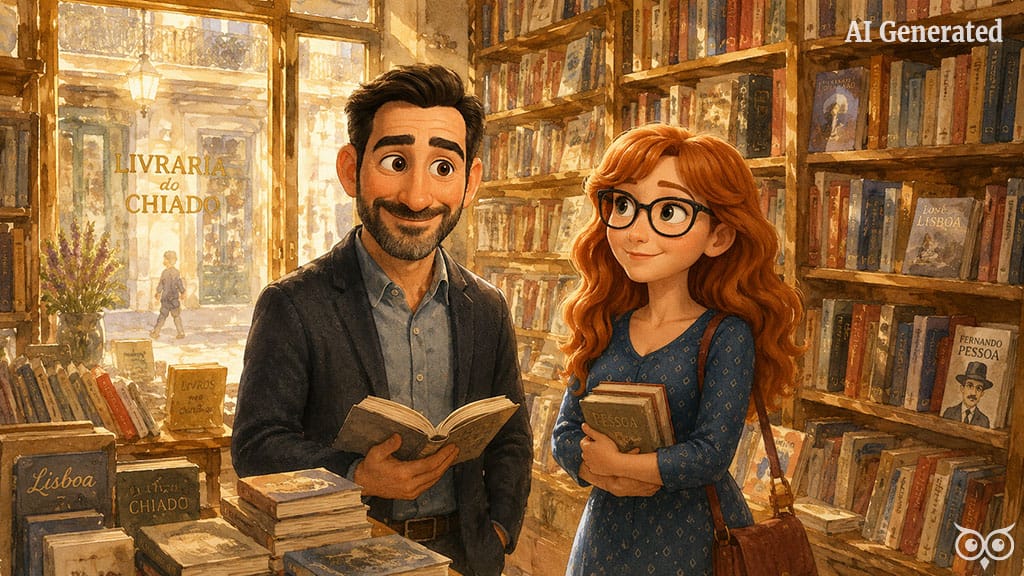
A luz da tarde entrava devagar pela montra de uma livraria pequena, no Chiado. A loja tinha livros do chão ao teto. Lá fora, o Elevador da Bica descia a rua.
Ana estava junto às prateleiras. Havia dias que procurava um livro. Um livro antigo, de capa gasta. Via-o sempre na hora de almoço, mas nunca o comprava.
Naquele dia, decidiu comprá-lo.
Estendeu a mão. Ao mesmo tempo, outra mão tocou no mesmo livro.
— Acho que este é meu — disse Ana, sem largar o livro.
— Acho que o vi primeiro — respondeu o desconhecido, também sem largar.
Ana olhou para ele. Era um homem alto, com um casaco de linho e um sorriso calmo. Falava português com sotaque inglês, mas um sotaque suave, de quem já vivia cá há muito tempo.
— É um bom livro — disse ela.
— É uma boa edição — respondeu ele. — E isso é diferente.
Ana riu-se e largou o livro.
— Pode ficar com ele. Mas diga-me: porque o quer tanto?
Ele abriu o livro devagar.
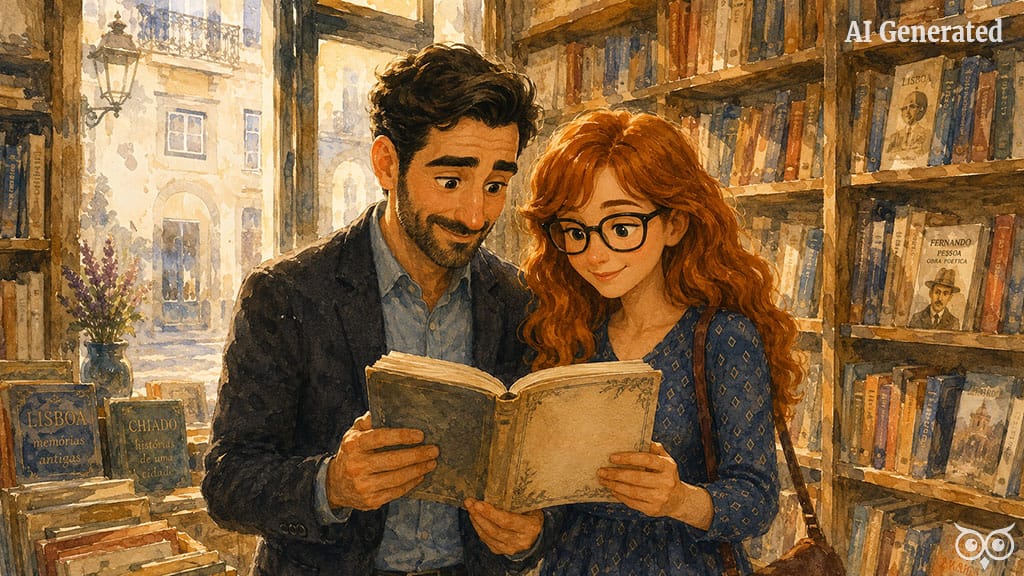
— Há aqui uma frase escrita à mão — disse. — Alguém deu este livro a outra pessoa, em 1961. Tenho curiosidade em saber o que aconteceu a essas pessoas.
Leram a frase juntos, ali mesmo, entre as prateleiras. Nunca descobriram quem era Isabel. Nem quem lhe escreveu, com tinta azul: "Para nunca te esquecer."
Quando olharam para cima, já estava na hora de fechar. O dono da loja, o Senhor Costa, virava o letreiro na porta.
— Vamos fechar — disse, com um sorriso. — Mas podem continuar a conversa lá fora.
No fim, não compraram o livro. Ele convidou Ana para tomar um café n'A Brasileira, ali perto.
— Chamo-me Aris — disse ele, à porta da livraria. — Aceita um café?
Ana sorriu.
— Aceito.
Sentaram-se numa mesa pequena, perto da janela.
Tinha chegado a Portugal há mais de dez anos. Dava aulas de inglês. Mas isso era só uma pequena parte da sua vida. Conhecia gente por todo o país: pescadores em Peniche, uma mulher no Alentejo que fazia cestos como a avó lhe tinha ensinado, um homem que trabalhou toda a vida num farol. Esse homem dizia que se lembrava de todos os barcos que já tinham passado por ali.
Ana também conhecia Lisboa assim, aos bocadinhos. Conhecia o atalho entre os prédios. Conhecia o café onde o dono sabia o pedido de todos, mas o nome de ninguém. Ana reconheceu em Aris algo parecido com ela própria. E também algo diferente, que gostou de descobrir.
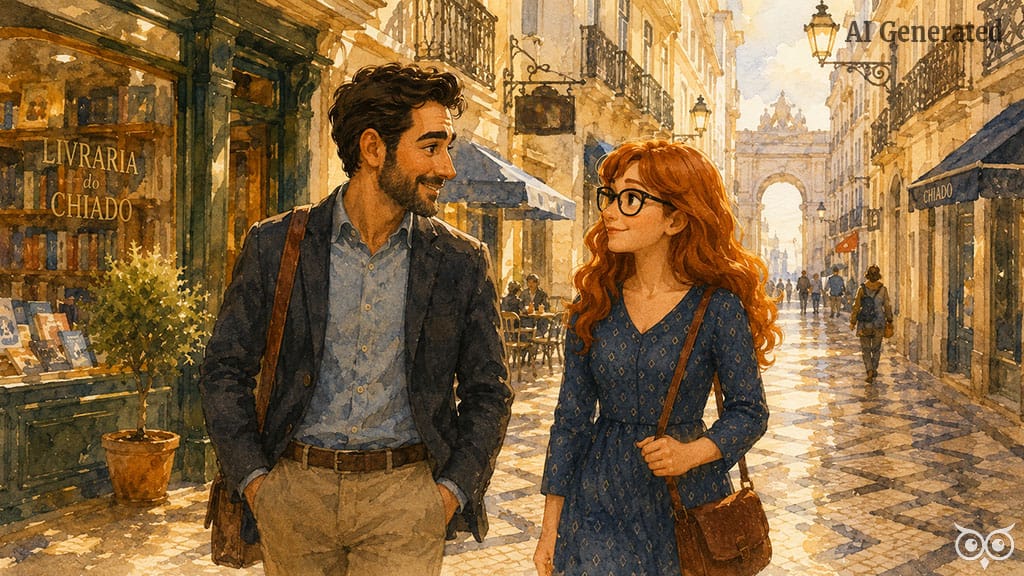
— És professor — disse ela. — Toda a gente pensa que isso é saber sempre as respostas.
— Pelo contrário... — respondeu Aris, a sorrir.
Foi assim que tudo começou. Não com apresentações. Mas com uma pequena disputa por um livro que, no fim, nenhum dos dois levou para casa.
Desde essa tarde, a Ana e o Aris andam por Portugal à procura de histórias.
Vão a Trás-os-Montes, onde uma viúva ainda coze pão num forno que a aldeia partilha há trezentos anos. Vão a uma tasca em Marvila, onde o fado começa sem aviso. Vão a uma aldeia da Beira, onde o tempo parece parar para ouvir as estórias que um homem ainda sabe contar — estórias dos tempos da sua bisavó.
Não viajam como turistas. Viajam como quem chega a meio de uma conversa — e só quer ouvir o resto.
O que a Ana repara, o Aris pergunta. O que o Aris já sabe, a Ana escreve.
Portugal, afinal, é como um livro enorme, por acabar. Um livro escrito nas fachadas de azulejo e nas calçadas das ruas estreitas. No segundo verso de um fado que toda a gente sabe e nas janelas, onde há sempre alguém a ver a rua passar.
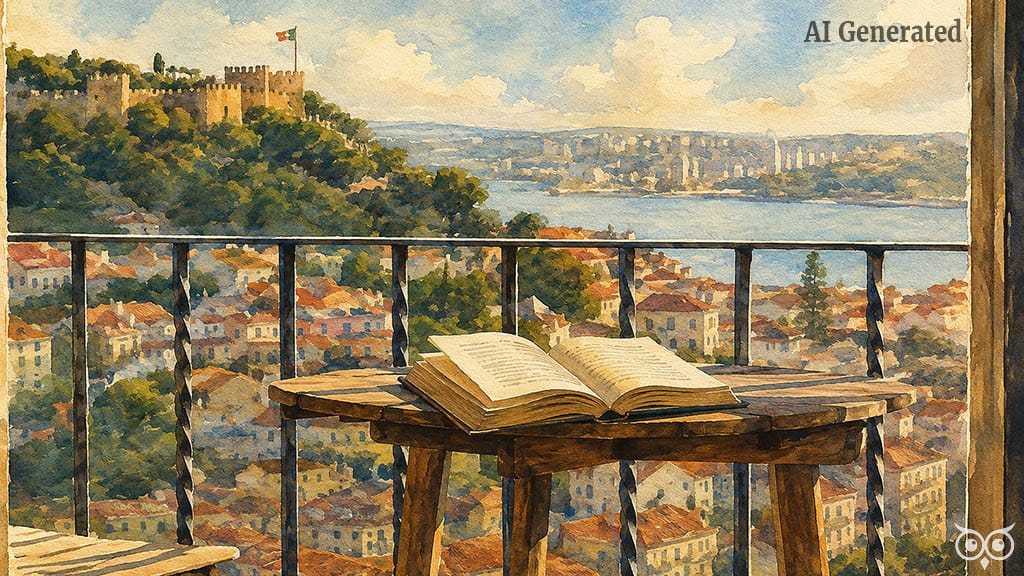
A maior parte das pessoas passa por estas páginas sem reparar na riqueza das suas estórias.
Ana e Aris decidiram só uma coisa: parar, olhar devagar, ler e escrever!
Esta é só a primeira página. Vira a folha, e vem com eles...
The Same Page
It was a Tuesday in Lisbon.
The afternoon light came in slowly through the window of a small bookshop in Chiado. The shop was lined with books from floor to ceiling. Outside, the Elevador da Bica creaked its way down the hill, as it always did.
Ana was standing by the shelves. She had been looking for a book for days — an old one, its cover worn — that she always noticed on her lunch break, and never quite bought.
That day, she decided to buy it.
She reached out her hand. At the same moment, another hand touched the same book.
"I think this one is mine," said Ana, not letting go.
"I think I saw it first," the stranger answered, not letting go either.
Ana looked at him. He was a tall man, in a linen jacket, with a calm smile. He spoke Portuguese with an English accent — a soft accent, the kind that comes from living here a long time.
"It's a good book," she said.
"It's a good edition," he replied. "And that's a different thing."
Ana laughed and let go of the book.
"Keep it. But tell me — why do you want it so much?"
He opened the book slowly.
"There's a handwritten note here," he said. "Someone gave this book to another person, in 1961. I want to know what happened to them."
They read the note together, right there among the shelves. They never found out who Isabel was, nor who had written to her, in blue ink: "Para nunca te esquecer" — never to forget you.
When they looked up, it was already time for the shop to close. The owner, Senhor Costa, was turning the sign on the door.
"We're closing," he said, with a smile. "But you're welcome to carry on the conversation outside."
In the end, they didn't buy the book. He invited Ana for a coffee at A Brasileira, just nearby.
"My name's Aris," he said, at the door of the shop. "Will you have a coffee with me?"
Ana smiled.
"I will."
They sat down at a small table, by the window.
He had come to Portugal more than ten years earlier. He taught English for a living, but that was only a small part of his life. He knew people all over the country: fishermen in Peniche, a woman in the Alentejo who made baskets the way her grandmother had taught her, a man who had spent his whole life keeping a lighthouse. That man said he remembered every ship that had ever passed.
Ana knew Lisbon in the same way, piece by piece. She knew the shortcut between the buildings. She knew the café where the owner remembered everyone's order, but no one's name. In Aris, Ana recognised something of herself. And something different too, which she was glad to discover.
"You're a teacher," she said. "Everyone thinks that means you always have the answers."
"Quite the opposite..." Aris replied, smiling.
That is how it all began. Not with introductions, but with a small dispute over a book that, in the end, neither of them took home.
Since that afternoon, Ana and Aris have gone wandering through Portugal in search of stories.
They go to Trás-os-Montes, where a widow still bakes bread in an oven the whole village has shared for three hundred years. They go to a tasca in Marvila, where the fado starts without warning. They go to a village in the Beira, where time seems to stop to listen to the stories a man still knows how to tell — stories from his great-grandmother's days.
They do not travel like tourists. They travel like people arriving in the middle of a conversation, wanting only to hear the rest.
What Ana notices, Aris asks about. What Aris already knows, Ana writes down.
Portugal, it turns out, is like an enormous, unfinished book. A book written on tiled façades and in the cobbled narrow streets. In the second verse of a fado that everyone knows, and in the windows, where someone is always watching the street go by.
Most people walk past these pages without noticing the richness of the stories inside them.
Ana and Aris have decided just one thing: to slow down, look closely, read — and write.
This is only the first page. Turn it, and come with them...